Innovative Instrumentation for Dynamic Balancing and Nondestructive Inspections
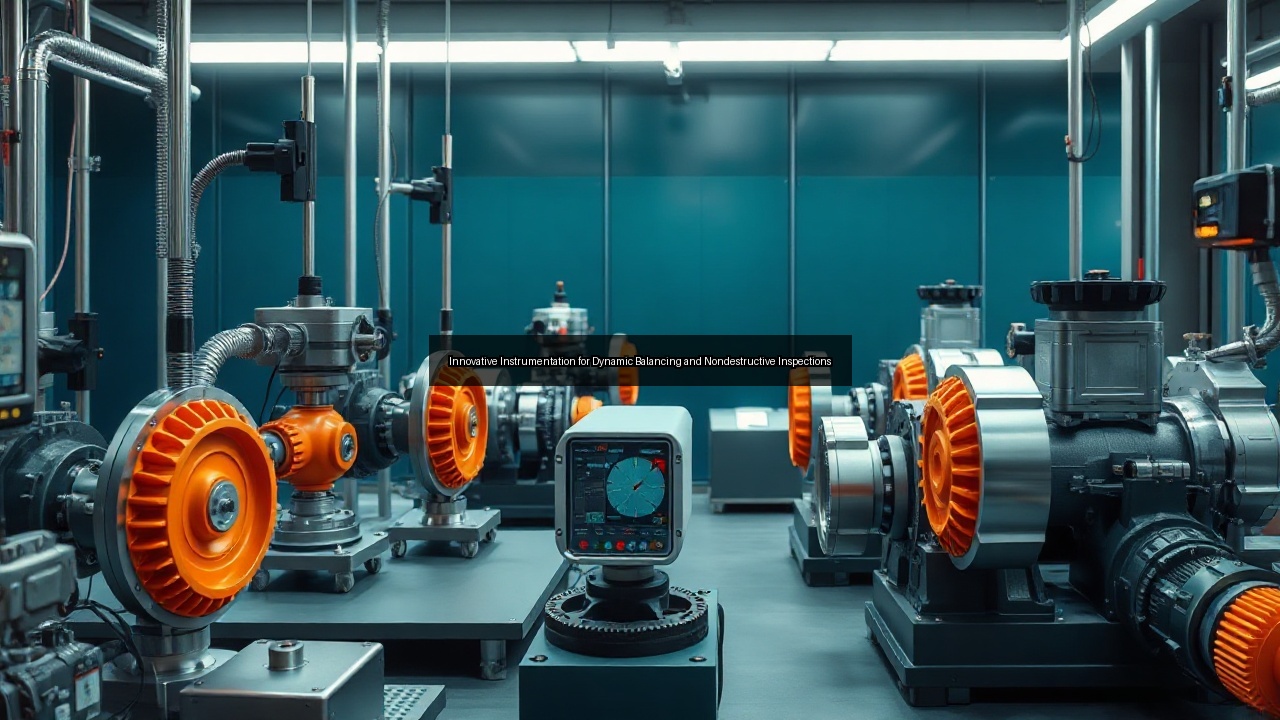
Understanding Dynamic Balancing Services
Importance of Dynamic Balancing in Engineering
Dynamic balancing services deliver precise corrections that keep rotating components stable under high-speed operation. Engineers rely on these services to eliminate uneven weight distribution that causes excessive vibration and premature failure in critical equipment. Proper balancing extends machine life, reduces maintenance costs, and improves overall efficiency across manufacturing and power generation facilities. Without accurate dynamic balancing services, rotors and turbines experience accelerated wear on bearings and seals. Companies that invest in regular balancing report fewer unplanned shutdowns and higher productivity. The process directly supports engineering goals of reliability and safety in demanding environments where even minor imbalances create major operational risks.
Key Factors Affecting Dynamic Balance: Weight and Shape
Weight distribution and component shape determine how well a rotor maintains equilibrium during rotation. Uneven mass placement shifts the center of gravity, producing forces that damage gears and bearings. Shape irregularities such as material removal or added masses from repairs further complicate balance. Technicians measure these variables with specialized instruments during dynamic balancing services to calculate exact correction points. Flywheels and turbines require careful attention because their geometry amplifies any deviation at operating speeds. Adjustments account for both static and dynamic effects so the finished assembly rotates without harmful motion. Consistent monitoring of weight and shape ensures long-term performance in oil pumps, compressors, and other high-load machines.
Applications of Dynamic Balancing in Various Industries
Dynamic balancing services support operations in aerospace, automotive, power generation, and heavy manufacturing. Gas turbine operators schedule balancing to maintain output and prevent vibration-related damage. Motor shops perform dynamic motor balance on industrial drives to meet production targets. Flywheel manufacturers use these services to stabilize energy storage systems. Gearbox builders apply balancing adjustments after assembly to reduce noise and extend service intervals. In each sector, the process improves motion control and lowers energy consumption. Facilities that integrate dynamic balancing services into routine maintenance achieve better quality assurance and fewer certification setbacks during audits.
Innovative Instrumentation for Dynamic Balancing
Advanced Calibration Techniques for Accurate Measurements
Modern calibration techniques rely on traceable standards to verify instrument accuracy before every balancing job. Technicians perform multiple calibrations on sensors and analyzers to eliminate drift that could mask true vibration signatures. These procedures follow documented protocols that record environmental conditions and reference values. Advanced systems now automate portions of the calibration process, cutting setup time while maintaining precision. Dynamic balancing services benefit directly from this rigor because corrected rotors stay within tolerance across full speed ranges. Regular calibration also supports compliance with ISO 9001 requirements and strengthens overall quality assurance programs in service facilities.
Instruments Used in Dynamic Balancing: An Overview
Portable vibration analyzers, laser alignment tools, and high-speed data acquisition units form the core instrumentation for dynamic balancing services. These devices capture amplitude and phase data that guide weight placement or material removal. Multi-channel systems allow simultaneous measurement on large rotors and turbines. Software packages convert raw readings into clear correction vectors that technicians apply on-site. Integration with balancing machines enables real-time feedback during adjustments. Facilities that maintain calibrated instruments deliver consistent results for dynamic motor balance projects and complex gas turbine work. Proper selection of instrumentation directly influences the speed and accuracy of every service call.
The Role of Vibration Analysis in Balancing Services
Vibration analysis identifies imbalance signatures before they escalate into failures. Analysts examine frequency spectra to separate imbalance from misalignment, looseness, or bearing defects. Dynamic balancing services use this data to target corrections precisely rather than applying trial weights blindly. Continuous monitoring programs track changes in vibration levels after balancing adjustments, confirming long-term stability. In gas turbine applications, vibration analysis detects early shifts caused by thermal growth or blade erosion. The combination of analysis and balancing reduces downtime and supports predictive maintenance strategies across industrial sites.
Nondestructive Inspection Techniques
Thermography: A Critical Tool for Inspections
Thermography reveals heat patterns that indicate electrical faults, friction problems, or insulation breakdown without contact. During dynamic balancing services, technicians scan bearings and couplings to spot temperature rises linked to residual imbalance. Infrared cameras capture data quickly, allowing inspectors to prioritize areas for further nondestructive testing. The technique supports quality assurance by documenting thermal baselines before and after balancing adjustments. In turbine environments, thermography helps verify that corrected rotors operate within safe thermal limits. Regular use of this method strengthens overall inspection programs and reduces the risk of unexpected outages.
Ensuring Quality Assurance Through Nondestructive Testing
Nondestructive testing methods verify component integrity before and after dynamic balancing services. Ultrasonic, eddy current, and magnetic particle inspections detect cracks or voids that could affect rotor stability. These checks confirm that balancing adjustments do not introduce new defects. Facilities maintain ISO and IEC compliance by documenting every test result in traceable records. Quality assurance teams review data to ensure machines meet performance specifications. Integrating nondestructive testing with balancing routines improves reliability and supports certification efforts in regulated industries such as power generation and aerospace.
ISO and IEC Standards in Nondestructive Inspections
ISO and IEC standards define procedures, equipment qualifications, and reporting formats for nondestructive inspections. Service providers follow these guidelines to deliver consistent results across dynamic balancing projects. ISO 9001 certification demonstrates that processes for calibration, documentation, and corrective action meet international expectations. IEC standards address electrical and electronic aspects of instrumentation used in vibration measurement. Adherence to both frameworks builds customer confidence and simplifies audits. Companies that align their dynamic balancing services with these standards reduce liability and strengthen market position.
Dynamic Balancing Adjustments and Their Impact
Understanding the Dynamics of Rotor and Turbine Balancing
Rotor and turbine balancing requires precise calculation of correction masses at multiple planes. Engineers model the effects of weight placement on overall motion to avoid creating new vibration modes. Dynamic balancing services account for operating speed, temperature, and load variations that influence final balance. Gas turbine applications demand especially tight tolerances because small residuals amplify at high rpm. Technicians use instrumentation to verify corrections under simulated conditions before returning units to service. Successful balancing reduces stress on blades, disks, and bearings while improving efficiency and extending overhaul intervals.
Dynamic Motor Balance: Techniques and Challenges
Dynamic motor balance addresses imbalance in both rotor and attached loads such as fans or pumps. Technicians measure vibration at multiple points and apply corrections that consider the entire assembly. Challenges arise from flexible foundations, variable speed drives, and thermal expansion during operation. Dynamic balancing services overcome these issues through multi-plane adjustments and post-balancing verification runs. Proper technique lowers energy use and extends bearing life in continuous-duty motors. Facilities that master dynamic motor balance report measurable gains in uptime and reduced noise levels throughout production areas.
Case Studies: Successful Dynamic Balancing Services in Action
One power plant restored a 40 MW gas turbine to full output after dynamic balancing services corrected a 12-gram imbalance at the compressor stage. Vibration dropped below alarm thresholds and remained stable through subsequent load cycles. In another case, a manufacturing site applied dynamic balancing adjustments to a critical gear motor, eliminating repeated bearing failures. Oil analysis confirmed reduced particulate generation after the work. These examples illustrate how targeted balancing improves machine reliability and supports broader maintenance goals. Documented results help justify ongoing investment in advanced instrumentation and trained personnel.
Future Trends in Dynamic Balancing and Inspection
Integrating IoT with Dynamic Balancing Instruments
IoT connectivity allows balancing instruments to stream vibration and correction data to centralized dashboards. Technicians review trends remotely and schedule dynamic balancing services before imbalance reaches critical levels. Wireless sensors mounted on turbines and motors provide continuous input without interrupting production. Cloud analytics correlate balance history with load and temperature data to refine prediction models. This integration improves response time and reduces the need for emergency call-outs. Facilities adopting IoT-enhanced instrumentation gain clearer visibility into equipment health across multiple sites.
The Future of Gas Turbine Balancing Services
Gas turbine balancing services will incorporate real-time adaptive algorithms that adjust for changing conditions during operation. Additive manufacturing techniques may enable on-site correction masses printed to exact specifications. Advanced sensors will detect micro-imbalances earlier, allowing proactive balancing adjustments. Service providers continue to refine procedures that meet stricter emissions and efficiency targets. These developments promise shorter turnaround times and longer intervals between major inspections while maintaining high standards of rotor integrity and performance.
Emerging Technologies in Nondestructive Inspections
Phased-array ultrasonics and computed tomography now deliver higher-resolution images of internal structures during nondestructive inspections. Automated drones equipped with thermography cameras inspect large turbines and gearboxes without scaffolding. Machine-learning tools analyze inspection data to flag anomalies faster than manual review. Dynamic balancing services benefit when combined with these technologies because technicians receive immediate feedback on correction quality. Continued advancement in instrumentation supports more comprehensive quality assurance programs and helps organizations maintain ISO and IEC compliance in evolving regulatory landscapes.
See Also
- The Role of Dynamic Balancing in Optimizing Gas Turbine Efficiency and Reliability
- Mastering Vibration Control through Expert Dynamic Balancing Techniques
- Dynamic Balancing Services and Their Impact on Quality Assurance in Engineering
- Unlocking Precision with Dynamic Balancing Services for Enhanced Machinery Performance